Artist Examples 10th February 2009
Once you are able to make some reasonably recognisable drawing what do
you do? You can learn about tone (light and dark) and colour.
But how do you want your picture to look? This is where it is
important to have some kind of objective. Here are two top tips.
1. Learn from artist examples. By visiting galleries, reading art
books and using the web you can look for the kind of art work that
inspires you; and so also the kind of work you want to emulate. This
term in the class I am introducing two contrasting artist examples.
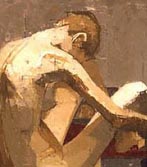
The measured precision of Euan Uglow shows us how to get proportion
correct; and he is also a great tutor of tone and colour.
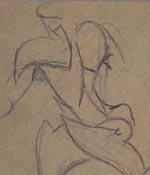
As an antidote to the mad measuring of Uglow, I offer you a glimpse of
Umberto Boccioni. Passionate, energetic, intuitive and even
destructive, his art focuses on movement and change.
Perhaps you can learn something from both artists?
2. Bring in to the class some of your own drawings which have worked
well. Each week I am introducing a new topic, but maybe you
should focus on what we did a few weeks ago? Develop that as your
main thing? So try to form a plan for yourself to work in a
particular style or media and make that your speciality. You might
learn more by ignoring what I say and following your own path! If
you have with you some drawings and your sketchbook I can help you
identify the direction you want to follow.